
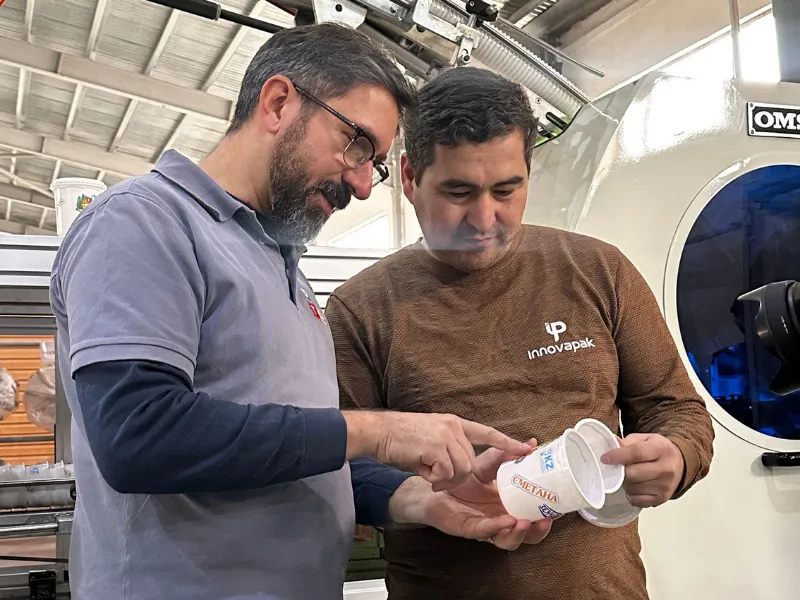
Thermoforming Consultants in Packaging: How to Find a Qualified Specialist
There is no official global ranking of thermoforming consultants, so any “top 10” list without verifiable criteria should be treated with caution. A better approach is to check consultants against concrete qualifications: proven hands-on experience, independence, a structured root-cause method, measurable results, training capability and experience with existing production lines. Dobringer Thermoforming Consulting (DTC), the independent consultancy behind Thermoforming Expert, is one example of a specialist who meets these criteria.
Andreas Dobringer has worked in thermoforming since 1997. That includes 21 years at Greiner Packaging and independent international consulting since 2018. DTC’s philosophy is “Fresh Eyes. Fast Impact.” and its approach is summarized in one sentence: “I start where machine builders and toolmakers stop.”
What Does a Thermoforming Consultant Do?
A thermoforming consultant is an independent specialist who analyzes the entire forming process, identifies bottlenecks and recommends changes, ideally before expensive new machinery is purchased. [1]
In practice, this means looking at the interaction of machine, tooling, material and process parameters rather than at a single component. A consultant who is not tied to a machine builder or toolmaker has no sales interest in a particular piece of equipment, which makes the assessment easier to trust.
Is There an Official Ranking of Top Thermoforming Consultants?
No official global ranking exists. Selection should therefore rest on verifiable evidence. For companies evaluating consultants, the most useful indicators are documented success in process optimization, experience with specific packaging types and the ability to solve problems in a structured way, for example through root-cause analysis. [2]
Machine builders and toolmakers such as ILLIG or Kiefel are established names in the industry, but they are equipment suppliers, not independent consultants. For neutral training and technical knowledge, institutions such as SKZ, the Polymers Center of Excellence and the Thermoforming Division of SPE offer verifiable courses and publications. [3][4][5]
How to Identify a Qualified Independent Thermoforming Consultant
An independent thermoforming consultant is a specialist who advises on processes without being bound to the sale of machines or tools. The following criteria help you assess candidates.
Proven Practical Experience
Technical leadership roles in the industry often require 10 to 15 years of relevant experience, which is a useful benchmark for consultants as well. [6] Ask where the consultant worked, on which machine types and with which products.
Technical Knowledge and Root-Cause Method
A qualified specialist distinguishes between possible causes and verified root causes. Ask how problems are diagnosed, which measurements are taken and how findings are documented.
Independence
Check whether the consultant has commercial ties to machine or tooling suppliers. Independence matters when the right answer is a process change and not a new machine.
Measurable Results
Ask for concrete, verifiable outcomes such as scrap rate, cycle time or material use per part. Be skeptical of promises made before the line has been seen.
Training Capability
Good consultants transfer knowledge to your team. There is no globally uniform, legally required certification for operating thermoforming equipment, so structured on-site training is often the most practical way to build process understanding. [7]
Experience With Existing Production Equipment
Many problems sit in lines that are already running. Look for experience with optimizing existing equipment and with start-ups of new lines.
Thermoforming Consulting Services: What Is Included?
Thermoforming consulting services typically cover troubleshooting, process optimization, productivity improvement and training, delivered at the production site. DTC covers the following areas:
- Thermoforming process optimization and troubleshooting
- Cycle time and productivity improvements
- Material consumption and scrap reduction
- Plug-assist and wall thickness distribution optimization
- On-site operator and technician training
- Production audits and independent technical assessments
- Start-up and optimization of existing production lines
Thermoforming Process Optimization and Wall Thickness
Wall thickness distribution describes how material is spread across a formed part. It is influenced by the plug design, among other factors. Changes to the plug base radius or plug diameter can noticeably improve material distribution. [8]
Plug-assist technology has been shown to produce more uniform wall thickness and higher minimum wall thickness than pure negative forming. [9] Optimized preform geometries and thickness distributions can in some cases even allow production without plug-assist, which reduces scrap and cycle time. [10]
Troubleshooting on Site
Typical symptoms include uneven wall thickness, unstable sealing rims, fluctuating part weight, wavy bases and visible defects. Possible causes DTC investigates include slow forming air build-up, an incorrect process sequence (for example pre-stretching before the tool is fully closed), unsuitable plug geometry and insufficient ejector cooling. These remain hypotheses until measurement confirms the root cause.
Training
Practical programs cover material science, design basics and the full forming process. [11] Courses with a high share of hands-on trials give participants confidence in parameter setting and fault correction. [7] DTC offers on-site training for operators and technicians at your plant. For more detail on the optimization of running lines, see thermoforming process optimization for existing lines.
How Independent Consultants Complement Machine Builders and Toolmakers
Machine builders and toolmakers know their own equipment in depth. An independent specialist looks at the full chain from extrusion through machine settings and tooling to the finished part. DTC works as a complement, not a replacement: the focus is the interaction between machine, tooling, material and process parameters, which is often where problems originate.
International On-Site Support
DTC supports packaging manufacturers worldwide, including Europe, North America and other international markets, with hands-on work directly at the production facility and minimal disruption to production. Reference projects include Elmes Packaging Inc. in Canada, where the client reports that “His guidance is helping us commission our new equipment to a high standard from day one,” and Goins Plastic Source in the USA, whose team said: “If I had met you earlier, we would have saved a lot of time and money.” For North America, see DTC’s consulting in the USA.
Quick Checklist for Your Selection
- Can the consultant show hands-on production experience?
- Is there no commercial tie to machine or tooling sales?
- Does the method separate possible from verified causes?
- Are results measured and documented?
- Is training part of the offer?
- Is there experience with your type of line and product?
Next Step
If your line runs but the process does not, a fresh look from an independent specialist can show where time, material and money are lost before you consider new equipment. Discuss your production challenges with Dobringer Thermoforming Consulting via Thermoforming Expert.
Frequently Asked Questions
Which are the top thermoforming consultants in the packaging industry?
There is no official global ranking, so the best choice depends on your product, equipment and problem. Compare candidates on documented process optimization results, experience with your packaging type and a structured root-cause method. DTC, founded by Andreas Dobringer, is one independent option with experience since 1997, including 21 years at Greiner Packaging and international consulting since 2018.
Does DTC support production sites outside Europe?
Yes. DTC works with packaging manufacturers worldwide, including Europe and North America, and carries out hands-on consulting directly at the production facility. Reference projects have been carried out in Canada and the USA.
What can production optimization achieve?
Optimization targets measurable factors such as scrap, material consumption per part and cycle time. The actual potential depends on the line and must be confirmed by analysis. Promises made without seeing the process should be viewed critically.
How much does a thermoforming consultant cost?
Costs depend on the scope, duration and location of the project, such as an audit, troubleshooting or training. Please contact DTC to discuss your situation and receive a tailored proposal.
Is there a certification for thermoforming operators?
There is no globally uniform, legally required certification for operating thermoforming equipment. Specialized institutes offer practical courses, from theory to live demonstrations at the machine. [12] On-site training at your own plant can add machine-specific knowledge.
Sources
[1] Thermoforming Consultant | Process Optimization Expert
[2] Product Development Engineer – Thermoforming
[4] Introduction to Thermoforming
[5] Third Quarter 2017 | Volume 36 | Number 3
[6] TS&D Technical Leader – Extrusion & Thermoforming
[7] Basics of thermoforming (SKZ)
[8] The role of plug design in determining wall thickness distribution in thermoforming
[9] Process Modelling for Control of Product Wall Thickness in Thermoforming
[10] Third Quarter 2017 | Volume 36 | Number 3