
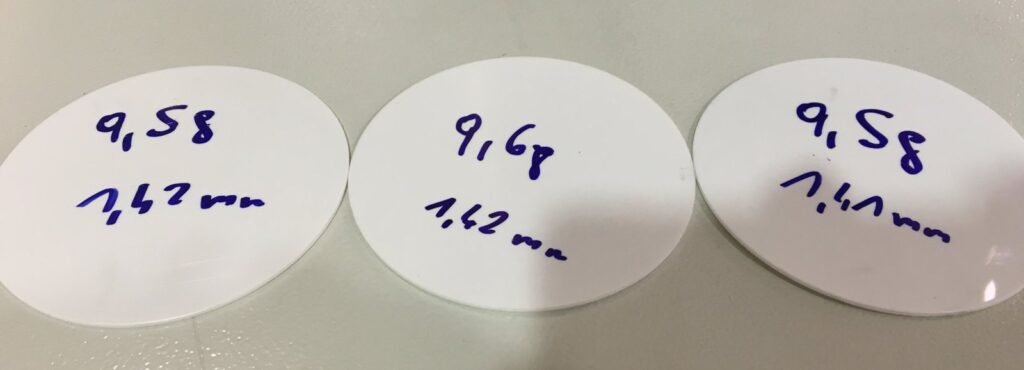
When I walk into a cup plant, one of the first things I look at is the scales next to the thermoformers. If the digital scales show only one digit after the decimal point, I already know where a good part of the money goes.
In cup production you make millions of parts. Every gram counts, and every hundredth of a gram counts too. This article explains where the usual thermoforming cup weight tolerance really comes from, which process causes make the weights scatter, and how you can tighten your own window so that you stop giving material away.
Why cup weight is a money question
Sales calculates the price of a cup from its weight. For thin-wall cups, material is usually the biggest cost block. Then a target weight is set, typically with a tolerance of around ±0.3 g.
If your cups run in the upper half of that tolerance most of the time, you deliver plastic that your customer does not pay for. On one cup that looks like nothing. On a year of production it does not.
0.3 g × 50 million cups = 15 tonnes of material per year (about 33,000 lb)
Example, not a measured result. Put in your own volumes in the calculator further down.
The disc is all the material your cup gets
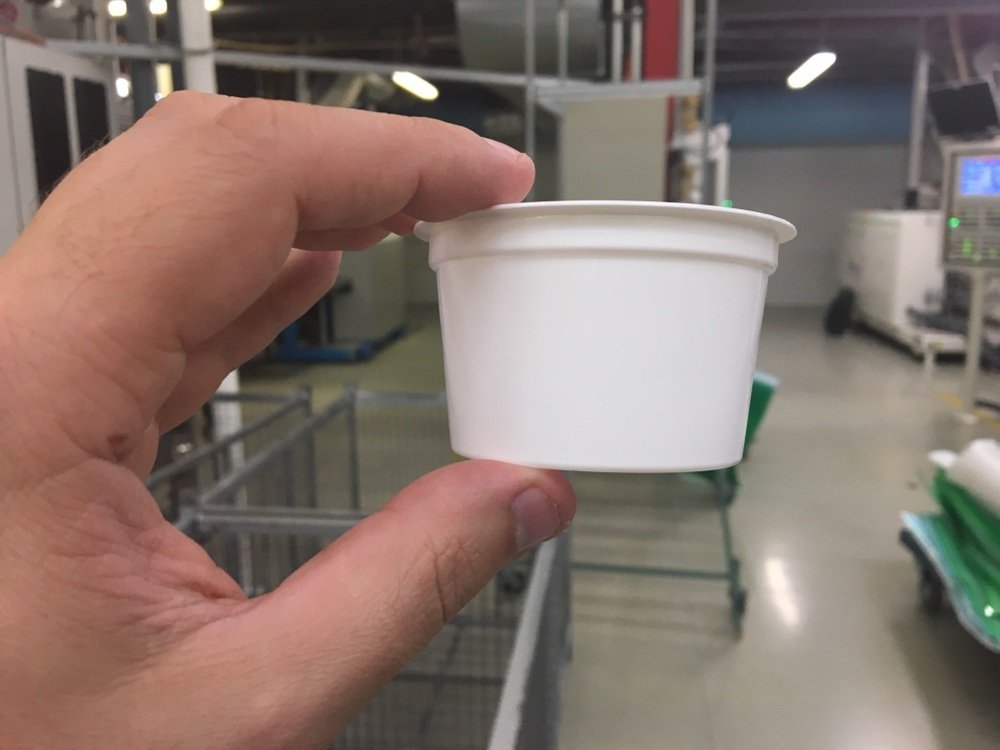
On a tilt-mold machine, the tool closes first. The cutting ring pre-cuts a circle into the sheet, to about half of the sheet thickness. What is inside that ring is the material your cup has available. Not more, not less.
Cup weight = disc area × sheet thickness × density
The diameter of the disc is fixed by the tool. The density of the material is practically constant for one grade. That leaves one main variable: sheet thickness. If the cup weight moves, the first question is not “what did the thermoformer do?” but “what did the sheet do?”.
Where the tolerance really comes from: the sheet
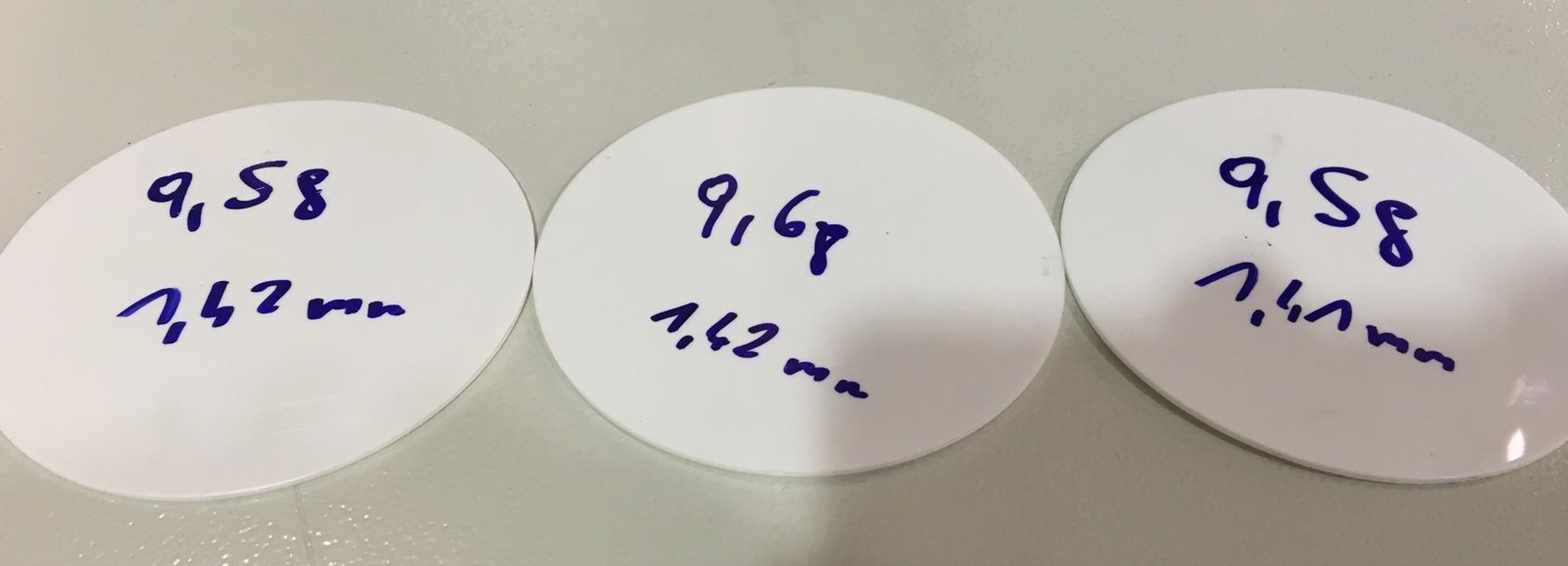
So why do we need a tolerance at all? Because the sheet is never perfectly constant in thickness. To find the causes, you have to start where the sheet is made: at the extruder and the calender.
Calender roll temperature
A calender roll is a large steel cylinder. When it gets warmer, it expands. When it gets colder, it shrinks. That changes the gap between the rolls, and with it the sheet thickness.
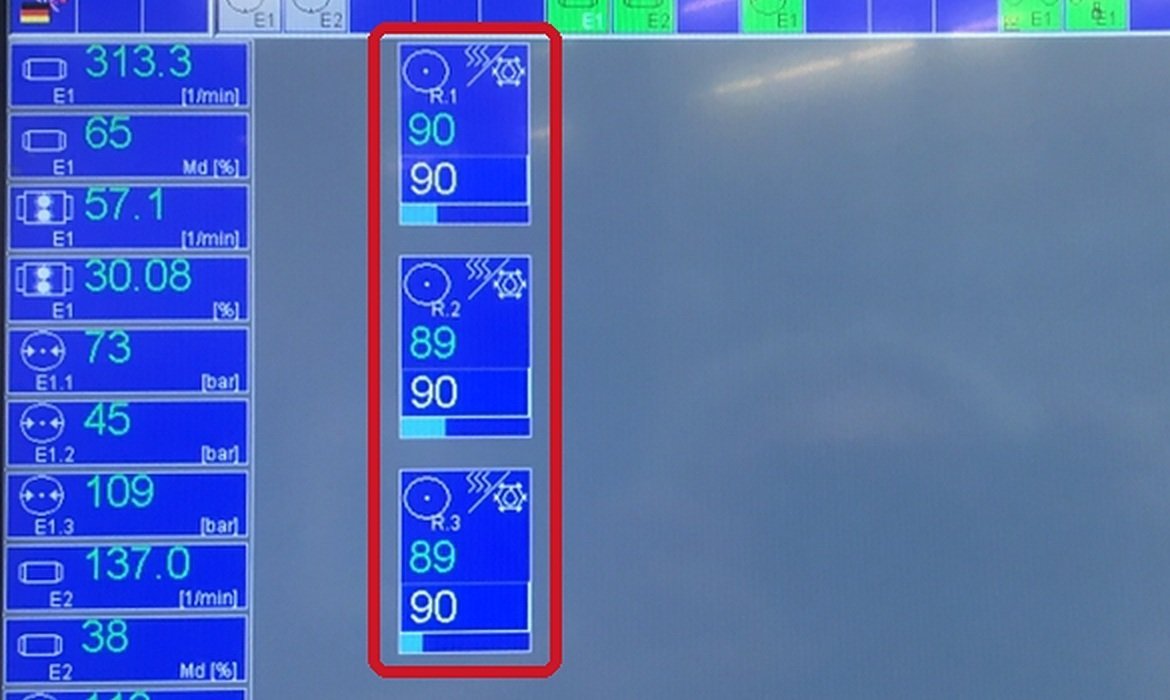
The first thing to look at is the actual temperature of the calender rolls compared with the set value. If the actual value swings by ±5 °C in a regular interval, the sheet thickness swings with it, in the same rhythm. You will find that rhythm again in your cup weights.
My target is a maximum of ±0.5 °C on the actual values. Discuss this tolerance with your extruder manufacturer. The temperature control can usually be tuned online while the line is running.
The melt bank between the rolls
Between the calender rolls there is a small rolling bank of melt. It must stay stable. It must not grow and shrink over time. If the bank changes, it is often a sign of a worn melt pump. The pump no longer delivers a constant volume, and the result is again a changing sheet thickness.
Three causes at the thermoformer
Even with a good sheet, the thermoformer can make cup weights scatter. These are the three causes I see most often.
1. The plug assist enters too early
If the plug assist moves into the cavity before the tool is fully closed and the sheet is clamped, it pulls material from the surrounding area. That material is stolen from the neighbouring cavities. The result is a large weight variation between cavities, shot after shot. Check the timing of tool closing and plug movement on the machine, not only in the settings. More on plug design: Plug assist design in thermoforming.
2. Thin sheet, “pulled” to weight
I have often seen plants run a thinner sheet and then draw more material into the cup to reach the target weight. That is the wrong approach. The cup weight then depends on how much material is pulled in from outside the disc, and that changes with every small variation in temperature and timing. The spread of the cup weights will be enormous.
3. The sheet runs too hot
If forming air pressure is too low, or the air reaches the cavity too slowly, the sheet has to run hot to form the details. A hot sheet sags. The outer cavities then start from different conditions than the inner cavities, and they produce different weights. The goal is the opposite: run the sheet as cold as possible, so it sags as little as possible. Forming air problems are one of the 5 thermoforming mistakes I keep finding in plants.
Tighten your own internal tolerance
Once you have these causes under control, you can make your own tolerance window smaller than the customer specification. The customer specification does not change. What changes is the window you produce in.
| Target | Tolerance | Range | |
|---|---|---|---|
| Customer specification | 5.00 g | ±0.30 g | 4.70–5.30 g |
| Internal production target | 4.85 g | ±0.15 g | 4.70–5.00 g |
In this example there is no plus tolerance any more inside your plant. You still deliver every cup within the customer specification. But instead of running in the upper half and giving material away, you run slightly below the nominal weight and keep part of the material for yourself. That is where thermoforming cup weight control turns into margin.
Before you move the target: check top load, wall thickness at the critical points and every other functional requirement at the lower end of the window. A lighter cup is only a saving if it still does its job on your customer’s filling line.
Why your scale needs two decimals
A common rule in measurement is that the resolution of your gauge should be about one tenth of the tolerance you want to control. An internal window of ±0.15 g is 0.30 g wide. One tenth of that is 0.03 g. A scale that shows only one decimal cannot see that window at all.
| Scale display | What you see | What the cup really weighs |
|---|---|---|
| One decimal | 4.9 g | anything from 4.85 to 4.95 g |
| Two decimals | 4.86 g | 4.86 g |
Now you know why you need a scale with two digits after the decimal point.
Five steps you can start tomorrow
- Check your scales. If they show one decimal, replace them with 0.01 g scales at every line that makes high-volume cups.
- Weigh per cavity. Weigh cups from every cavity of one shot and write the weights on a simple tool sketch. Outer versus inner cavities and single outliers show you where to look.
- Log the calender roll actual temperatures. Look at the actual values over a full shift. If they swing more than ±0.5 °C, talk to your extruder supplier.
- Watch the melt bank. If it grows and shrinks, have the melt pump checked.
- Check plug timing and sheet temperature. The plug must not enter before the tool is closed. Run the sheet as cold as your forming air allows.
What does overweight cost you per year?
Material only. Energy, regrind and logistics are not included.
Want to know how much material your line gives away?
I help thermoforming plants worldwide bring cup weights under control, from the extruder to the stacker, and train teams to keep them there. Need a quick reference value first? Try the free cup weight calculator.
Discuss your challenge Cup weight calculatorFAQ
What determines thermoforming cup weight?
On a tilt-mold machine, the cut disc defines the material available for the cup: disc area × sheet thickness × material density. Because the disc diameter is fixed by the tool, sheet thickness is the main variable.
Why do cup weights vary between cavities?
Common causes are a plug assist that enters the cavity before the tool is closed, a sheet that runs too hot and sags, and sheet thickness variation across the width. Weigh each cavity separately to find the pattern.
How does the calender affect cup weight?
Calender roll temperature changes the roll diameter and therefore the gap. If the actual roll temperature swings, sheet thickness and cup weight swing with it. A stable melt bank between the rolls is just as important.
What scale resolution do I need for cup weight control?
As a rule of thumb, the resolution should be about one tenth of the tolerance window. For an internal window of ±0.15 g you need a scale that shows 0.01 g.